|
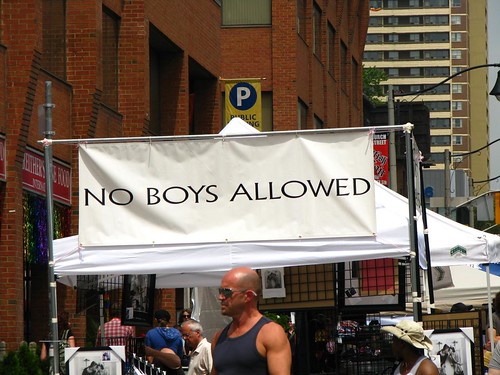
| Image courtesy of LexnGer |
This question is from male feminist and friend of NAW, Jeremy:
So I was reading Twisty's post today about the nude revolutionaries business and she argues that for western women to use their nude bodies for the purposes of subversion doesn't work because the nude female body is always re-inscribed into the male gaze. I wonder, then, if the female body must be hidden, how is this not simply placing the power over the female body back into patriarchal terms? She's right that a nude female body will be subject to the male gaze, but by hiding the body it is also responding to the shaping of the male gaze.
I couldn't remember if you had, so I was hoping you could point me to one of your blog posts that takes up this issue of female nudity, feminism, and the male gaze, or if you haven't written on it, I'd love to hear your thoughts. My initial reaction to articles on iblamethepatriarchy is usually one of resistance, but maybe because I think it's because I don't like that version of feminism because it feels to man-hating and second-wave-y to me. I'd love to learn otherwise, but from my infrequent reading, it sure seems that the spinster aunt doesn't like men, and doesn't like male feminists, so I end up being told that any response I might have is wrong or unwelcome right out the gate. Sure, that's what women have experienced for a very long time, but to try to shift the tables so men are then in the persecuted social position is the angry approach of second-wavers who seemed to often want to simply usurp the male authority rather than address the problematic social imaginary and logic that perpetuated the inequality and mistreatment.
Anyway, I'd love to hear your musings.
Now, ordinarily I'm wary of questions about man-hating feminists, since many people ask those questions out of ignorance. Their evidence for the existence of man-hating feminists tends to either come from pop culture representations of hot but angry women with short hair who say they refuse to shave their legs but who always have smooth legs on screen - or some people just get these questions from applying their pre-conceived notions of feminists in such a way that no matter what I say, they think anything other than "I want to obey a man" means "I want to dominate a man." I say, "You know, it's especially problematic that women are so often portrayed without faces in print advertising," and they say, "Sure, blame it all on the men!" Even though I never mentioned men. So, I'm normally cautious about those questions.
But Jeremy's question struck a cord with me. Not only do I know Jeremy is himself a feminist who knows there are various camps in the movement and who does not buy into those stereotypes - I also know that Jeremy's asking about a specific blogger and about a recent post that left me with some similar questions. Plus, he's asking about a radical feminist that we at NAW kinda endorse by including a link in our blog roll. Awhile ago I posted about a conflict between Twisty at I Blame the Patriarchy and a sex positive blogger (whom I linked once in my original post but am not linking again). See, Twisty uses a lot of anti-men rhetoric. This isn't to suggest that she hates all men - she has posted about male friends, for instance. But she is aggressively anti any form of patriarchy or femininity, as she sees patriarchy as the system at the root of all evil, and as she sees femininity as an unnatural system constructed to take power from women.
So recently Twisty blogged about nude feminists and explained why she saw a real reclamation of power in an Egyptian woman's decision to post nude photos in protest of restrictions placed on female attire in her home country, but why she saw a Canadian woman producing a pin-up calendar to simply play into patriarchal values. And that post is what inspired the first part of Jeremy's question - he wants to know my thoughts on this issue and whether I'd agree with Twisty. And, I am very much biased on this issue - we've discussed pornography at length on NAW since Erica sees it as (frequently) empowering, where I see it as (always) degrading to all participants, and usually degrading to women. Erica and I of course have our different biases - as someone who has never willingly watched anything that most people would call pornography, I feel outright traumatized if a pornographic image pops up on my computer. I feel violated - it is a violent experience for me. For Erica, the right kind of pornography can be quite liberating. So, we have different opinions. And there are a lot of different opinions out there. If I had my druthers, pornography would be illegal in the US, or at least more restricted. Yes, I'm that extreme. But I also recognize that quantifying and defining pornography is like trying to catch a shadow. While I see that vampire romance novel as pornographic, I know many people who disagree - and I don't have the right to make it illegal.
So I don't have a very good answer for this question of whether the pin-up calendar is liberating. If I had the stomach to click on Twisty's links to the calendar, I could tell you my opinion of that particular example of nudity-for-feminism. But I'm so opposed to pornography that I'm not about to click on something that touts itself as being in pin up girl style.
As for Jeremy's second question, about radical femininsts and man-hating, I have a few thoughts, but they're still conflicted. On the one hand, I don't share Jeremy's concern that Twisty wants to usurp male authority and set up a world where men are persecuted in the place of women. If anything, I get the impression Twisty just doesn't wants to live apart from men. Granted, she'll then go and post something about a male friend just to confuse me, and she says everything so tongue-in-cheek that I can never tell when she's serious. In fact, I've been chuckling over her posts for so long that it came as a shock to me when I read a recent post that is opposed to romantic relationships of any sort. When I saw the title indicating she was going to "give relationship advice to no one in particular," I expected something pithy about how damaging a certain type of relationship can be: instead, she advised all women to avoid relationship, even adding a note that homosexual relationships are just as damaging because they're based on heterosexual patterns.
And suddenly I sat back and thought, "Crap. She's serious." But even as I type this blog post, there's a part of me that thinks, "I don't know - she can't be against all relationships." But she says she is, and I think I'm guilty of putting up Twisty in my own image. So how do I feel about Twisty's message? I don't know!
But back to Jeremy's request for links to NAW posts dealing with issues of nudity, the male gaze, etc.
First off, one of our earliest posts came from Erica in 2009, "My Body's Politik," where Erica discusses these issues in the context of her own body and her conflicted emotions about weight loss.
Then I've got a post from last year where I listed off various discussions involving feminism and the body, "Bodies and the Blogosphere." Incidentally, that post includes a brief discussion of Twisty's views on pornography.
If you want to see a full-on conversation about pornography, Erica and I had a conversation in a series of posts last year. First Erica responded to "Bodies and the Blogosphere" (above), in "Porn, Porn, Porn." I then did some research in order to provide an articulate answer and wrote, "The Problem with Porn: Part 1" and "The Problem with Porn: Part 2." Sadly, I never felt that I'd finished that discussion. The timing was just bad - it was the beginning of a particularly stressful period of my life, a period which never quite ended (I know, I know, Rich World Problems and all that).
You might also appreciate Erica's discussion of "Self-centered Sex Differences" and how the concept of penis envy assumes a penis inherently brings power that breasts and a vagina don't. And then there's Michelle's post about the class virgin/whose (false) dichotomy, "Caught Between an Angel and a Prostitute." And there's also my post from Fall 2010, "Naked Skin: Why I Love My Face Without Makeup."
And then you really should just look over the entire month of January 2011, as our theme was the body. I also kinda wish I could find an earlier post where Erica pointed to a plus model who was in a relatively tame commercial but who faced a strong retaliation from family-minded folks who interpreted her curves as pornographic. Which is, again, why I recognize that pornography is a tricky, tricky, tricky subject.